
Step-by-Step: How Bespoke Tailoring Works in Bangkok
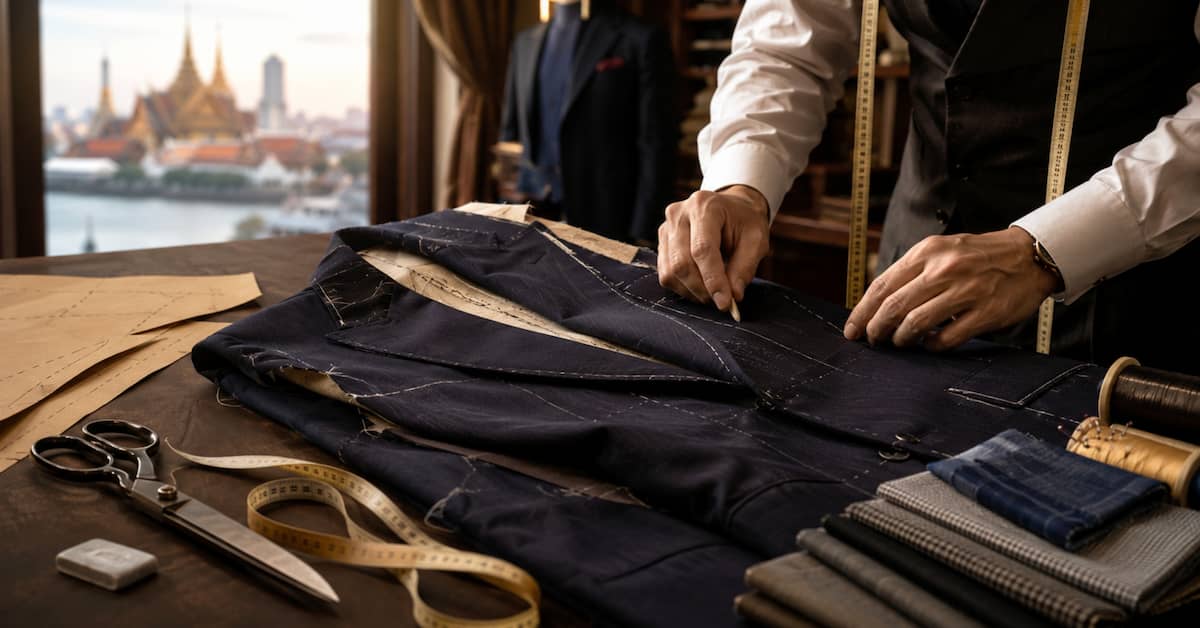
Getting a suit made in Bangkok can be an excellent option for travellers, professionals and grooms who want a more personal fit than off-the-rack clothing can provide. However, tailoring standards, construction methods, fabrics and fitting processes vary widely between shops.
This guide explains how bespoke tailoring generally works in Bangkok, from your first consultation to final collection. Understanding the process helps you ask better questions, manage your timeline and choose a tailor based on workmanship rather than only price.
Step 1: What Happens During Your First Tailoring Consultation?
Your first visit is where the tailor learns what you need, how you want the garment to fit and when you need it completed. A proper consultation should happen before measurements are taken, rather than beginning immediately with fabric samples or a sales pitch.
Your tailor should ask about your needs before discussing fabric
A good consultation usually covers:
-
Your purpose for the garment: Business, weddings, formal events, travel or everyday wear
-
Your lifestyle: How often you expect to wear the suit and where you will wear it
-
Climate considerations: Bangkok’s heat and humidity often make lighter, more breathable fabrics a practical choice
-
Your timeline: The number of days available for fittings before you leave Bangkok
-
Your existing wardrobe: Colours, styles or gaps that the new garment should complement
You will choose the fabric, style and construction details
The consultation is also where you decide how the garment will look and feel. Your tailor should explain the practical differences between fabrics and construction methods rather than simply showing the most expensive options first.
Jacket: Single- or double-breasted style, lapel width, button stance and pocket type
Trousers: Pleated or flat-front trousers, cuffs or no cuffs, rise and overall fit
Lining: Full, half or unlined construction, depending on the desired weight and breathability
Construction: Fused, half-canvas or full-canvas options
For travellers who are short on time, it is useful to prepare before your visit. Read our guide on how tourists can get a perfect suit in three days in Bangkok for a practical overview of what to plan.
What should you bring to your first tailoring appointment?
Bring a few useful references to help the tailor understand your preferences:
-
Your best-fitting jacket or suit to show your preferred proportions
-
Dress shoes to establish the correct trouser length and break
-
Reference photos from Pinterest, magazines or previous outfits
-
Your travel schedule so fittings can be planned realistically
Step 2: How Is a Bespoke Pattern Created?
Bespoke tailoring starts with a pattern created around your body. This is different from made-to-measure, where an existing pattern is adjusted within a set range of measurements.
Measurements go beyond chest, waist and trouser length
A tailor will normally take a series of measurements across the body, including:
Vertical measurements: Back length, sleeve length and trouser length
Horizontal measurements: Chest, waist, hips, bicep, wrist, thigh and knee
Posture observations: Shoulder slope, stance and natural body asymmetries
Movement considerations: How you stand, sit and walk in the garment
A bespoke pattern accounts for your proportions and posture
The pattern is the foundation of the suit. It allows the tailor to account for details that standard sizing often misses, such as one shoulder sitting lower than the other, a forward stance or differences in arm position.
The pattern also includes wearing ease, which is the amount of space needed for comfort and movement. A suit should look close to the body without restricting you when you sit, reach or walk.
Step 3: How Is Fabric Cut for a Bespoke Suit?
Once the pattern is ready, the tailor or cutter lays it over the selected fabric and cuts the garment pieces. This stage affects how the suit hangs, moves and aligns when worn.
Proper cutting considers grain, fabric direction and pattern matching
The cutter should review the fabric for:
Defects or irregularities: Areas that should be avoided
Pattern alignment: Checks and stripes that need to meet at seams, pockets and shoulders
Grain direction: Important for drape, shape and how the garment moves
Nap direction: Essential for fabrics such as velvet and corduroy
Pattern matching is particularly noticeable on striped and checked suits. When the cloth is cut carefully, the design flows across the front of the jacket and meets cleanly at key seams.
Step 4: How Does Suit Construction Affect Fit and Longevity?
Construction is one of the biggest differences between a low-cost suit and a garment designed for regular wear. It affects shape, drape, breathability and how the jacket responds over time.
Canvas gives the jacket its internal structure
The canvas sits between the outer cloth and lining. It helps create the shape of the chest and lapel while allowing the jacket to move more naturally with the wearer.
| Canvas Type | Construction | Typical Use |
|---|---|---|
| Fused | Interfacing glued to the fabric | Entry-level or occasional-wear suits |
| Half-canvas | Canvas through the chest, fused below | Regular business and formalwear |
| Full canvas | Canvas construction throughout the jacket | Higher-end suits with enhanced drape |
Fused construction is not automatically unsuitable, particularly for lighter or more affordable garments. However, clients who value shape, longevity and a more natural drape should ask the tailor whether half-canvas or full-canvas construction is available.
Hand-finished details can improve strength and appearance
Depending on the tailor and the chosen level of construction, these details may include:
Reinforced arm stitching in high-movement areas
Soft collar felts for comfort around the neck
Pick stitching along lapels and pockets
Working sleeve buttonholes, often called surgeon’s cuffs
These details do not guarantee quality on their own, but they can indicate a higher level of attention to finishing.
Step 5: What Happens During a Bespoke Suit Fitting?
The first fitting is often called a basted fitting. At this stage, the garment is temporarily stitched together so the tailor can assess the fit before the final seams and details are completed.
A basted fitting creates room for meaningful adjustments
During the fitting, you may notice:
A slightly loose garment: Extra allowance is often left for alterations
Temporary stitching: This makes changes easier before final construction
Movement checks: You may be asked to raise your arms, sit and walk
Pin markings: The tailor identifies where the jacket or trousers need to be refined
Common adjustments improve balance as well as size
Jacket: Sleeve length, waist suppression, shoulder pitch and chest balance
Trousers: Waist, seat, hem length and trouser break
Overall balance: Ensuring the jacket hangs correctly from front to back
Most clients need one or two fittings. More complex garments, first-time bespoke clients or people with significant posture variations may need an additional fitting.
Step 6: How Is a Bespoke Suit Checked Before Collection?
Before collection or delivery, the garment should be inspected for fit, finishing and accuracy against the details agreed during consultation.
Final quality control should check the garment inside and out
A completed suit should be reviewed for:
Stitch consistency: No loose threads or visibly uneven stitching
Button security: Firm attachment, especially on the jacket front and cuffs
Lining fit: No pulling, twisting or bunching
Pressing quality: Clean edges without unwanted shine marks
Detail verification: The correct fabric, lining, buttons, pockets and styling choices
Always try the finished garment on before leaving Bangkok where possible. This gives you the best opportunity to request small final adjustments.
What Happens Between Bespoke Suit Fittings?
Much of the work happens between appointments. The tailor uses fitting notes to adjust the pattern, alter the cloth and refine the garment before assembling it again.
The work between fittings shapes the final result
The process generally includes:
-
Pattern preparation and fabric cutting
-
Canvas shaping and initial assembly
-
Basted construction for the first fitting
-
Adjustments based on fitting notes
-
Reassembly, finishing and pressing
-
Final quality control before collection
This is why a longer timeline usually gives better results. A fast turnaround may still be possible, but it leaves less room for corrections and detailed finishing.
How Long Does Bespoke Tailoring Take in Bangkok?
The right timeline depends on the complexity of the order, the number of fittings required and your availability while in Bangkok.
| Timeline | What Is Possible | Best For |
|---|---|---|
| 48 hours | Basic alterations or simple garments | Emergencies only |
| 3–4 days | A tailored suit with a compressed fitting schedule | Short business trips |
| 5–7 days | More time for fitting and adjustment | Most travellers |
| Two weeks or more | Complex orders, wedding parties or larger wardrobes | Clients with flexible schedules |
A three- to seven-day schedule is generally more realistic for visitors who want enough time for at least one fitting and any necessary adjustments. For a practical day-by-day plan, see how to get a tailored suit in Bangkok within three days. Travellers who need a more flexible appointment schedule may also find our guide to hotel fittings and private appointments useful.
How Much Does a Bespoke Suit Cost in Bangkok?
Bangkok suit prices vary significantly according to fabric, construction, the number of fittings and whether the garment is genuinely bespoke, made-to-measure or a fast-turnaround tailored suit.
As a practical guide, entry-level tailored suits in Bangkok commonly start at around THB 8,000–12,000. A more realistic budget for better fabric options, greater fitting flexibility and stronger construction is often around THB 15,000–30,000. Premium fabrics, full-canvas construction and more detailed hand-finishing can place a suit at THB 30,000–50,000 or more. These ranges broadly align with current Bangkok pricing guidance for standard, rush and higher-construction orders.
| Price Range | What You May Expect |
|---|---|
| THB 8,000–12,000 | Entry-level fabric choices, simpler construction and limited fitting flexibility |
| THB 15,000–30,000 | Better fabric options, more customisation and more time for adjustments |
| THB 30,000–50,000+ | Premium cloth, advanced construction and higher levels of hand-finishing |
Price alone does not tell you whether a suit is good. Ask what fabric you are buying, whether the jacket is fused or canvassed, how many fittings are included and what happens if further adjustments are needed. For a more detailed breakdown, explore our Bangkok tailor pricing guide and our article on what to look for when visiting a tailor in Bangkok.
Conclusion
Understanding the bespoke process helps you make better choices about fit, construction, fabrics and timing. The best outcome usually comes from allowing enough time for fittings, asking direct questions about how the garment is made and choosing a tailor who listens before selling.
At Jesse & Son, we believe choosing a Bkk tailor should feel straightforward rather than overwhelming. We are happy to explain the differences between fabric, fit and construction clearly, so you can choose a garment that suits your needs, your schedule and the way you want to wear it. Before choosing your cloth, you may also want to read our guide to the best fabrics for Bangkok’s humid climate and browse our suiting fabric collection.
Frequently Asked Questions About Bespoke Tailoring in Bangkok
How much does a bespoke suit cost in Bangkok?
A basic tailored suit can start at around THB 8,000–12,000. For better fabric options, more fitting time and stronger construction, many clients should budget around THB 15,000–30,000. Premium bespoke suits can reach THB 30,000–50,000 or more. For a clearer comparison of fabric tiers and garment options, see our Bangkok tailor pricing guide.
How many fittings do I need for a bespoke suit?
Most clients need one or two fittings. Complex fits, first-time bespoke clients or garments with more detailed styling may benefit from a third fitting. Allowing enough time between appointments gives the tailor more opportunity to refine the result.
What is the difference between bespoke and made-to-measure?
Bespoke tailoring creates a pattern around your body and proportions. Made-to-measure adapts an existing pattern. Bespoke usually gives the tailor more flexibility to refine posture, balance, shape and individual style details.
Is it worth getting a suit tailored in Thailand?
It can be, provided you choose a tailor with a clear consultation process, transparent pricing, appropriate construction options and enough time for fittings. Read our guide to visiting a tailor in Bangkok before making an appointment.
What should I bring to my first tailoring appointment?
Bring a well-fitting garment for reference, the shoes you expect to wear with the outfit and a few style references. You should also know your budget and available timeline. For help coordinating footwear with your finished garment, read how to choose the right shoes for a custom suit.
Can I get a bespoke suit in 48 hours in Bangkok?
Some shops can complete simple garments or alterations in 48 hours, but a more complete bespoke process benefits from additional time for fittings and adjustments. A three- to seven-day schedule is generally more practical. Our guide to getting a suit made in Bangkok in three days explains what is realistic within a short visit.
What is a basted fitting?
A basted fitting uses temporary stitching to hold the garment together before final construction. It allows the tailor to assess balance and make meaningful fit changes before the suit is finished.
How do I know whether a Bangkok tailor is legitimate?
Look for a physical workshop or established store, transparent pricing, clear answers about construction, fitting stages, fabric information and genuine client feedback. Avoid choosing based only on street offers or very low prices. Our article on how to prepare for a visit to a Bangkok tailor explains the quality indicators worth checking before you order.
What fabrics are best for Bangkok’s climate?
Lightweight wool, wool-silk-linen blends and breathable linen fabrics are often practical for Bangkok’s weather. Your tailor can recommend the right cloth depending on whether you will wear the garment locally, travel with it or use it mainly in cooler climates. Learn more in our guide to the best fabrics for Bangkok’s humid climate.
How long can a bespoke suit last?
Longevity depends on the fabric, construction, frequency of wear and care. Rotating suits, using suitable hangers and allowing the garment to rest between wears can help extend its useful life.
Can I get alterations after completion?
Yes. Reputable tailors can normally make minor post-completion alterations. Larger changes depend on the garment’s construction and the amount of seam allowance available. For garments that no longer fit as intended, alteration and restyling services may be a practical alternative to replacing them.
What is the best time of year to get a suit made in Bangkok?
You can get a suit made throughout the year. However, booking ahead is useful during busy travel periods, especially when you have a short stay and need several appointments.
What is included in the bespoke price?
The quoted price often includes consultation, measurements, fabric, construction, fittings and final pressing. Always confirm whether delivery, international shipping, additional trousers or later alterations are included before placing an order. You can also review our tailoring process to understand the construction details that may affect the final quote.
 +66814437747
 @jesseandson