
The Definitive 2026 Guide to Bespoke Tailoring: From First Fitting to Final Stitch
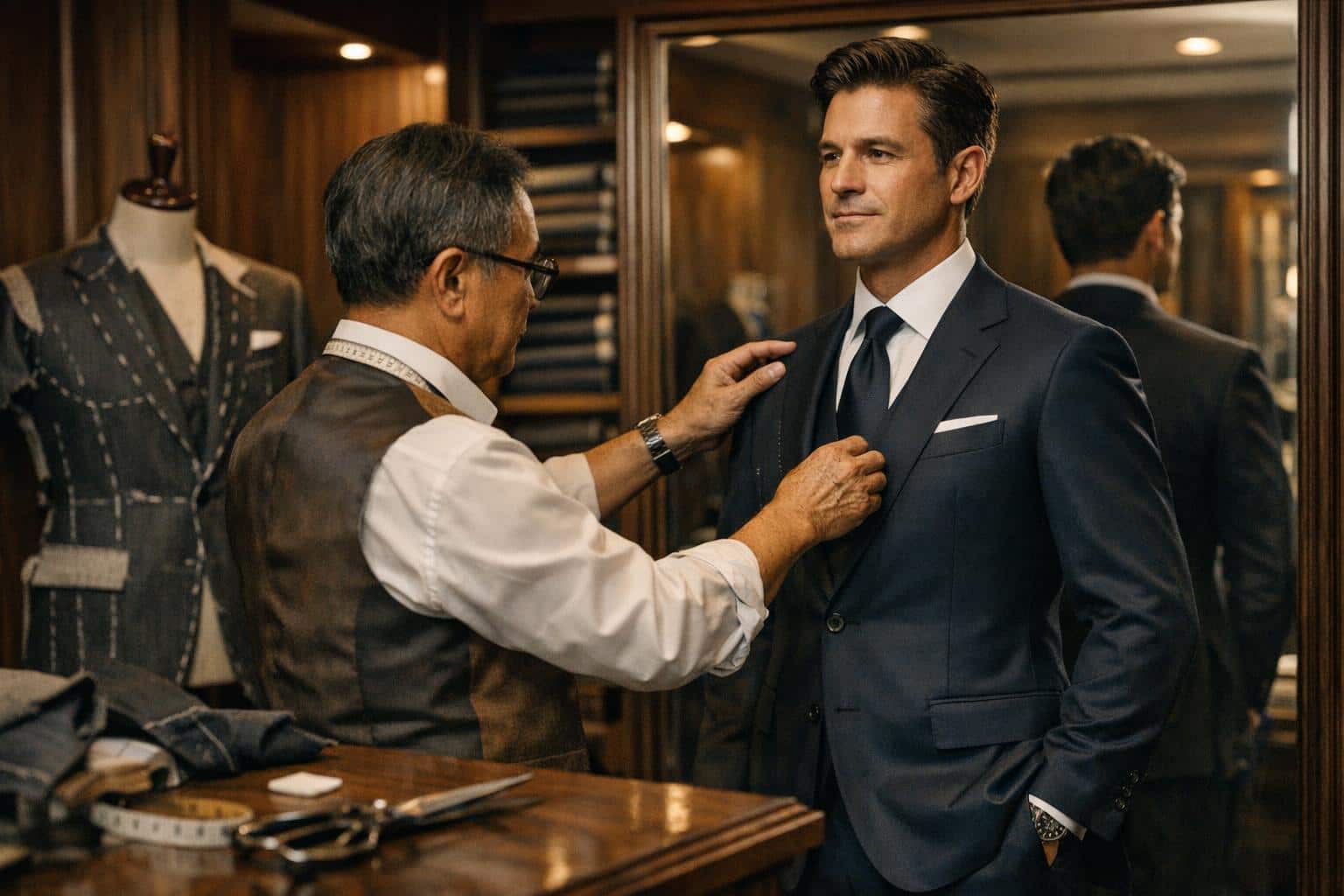
What Is Bespoke Tailoring? Understanding the Hierarchy
Defining True Bespoke
Bespoke tailoring represents the highest echelon of suit construction. The term originates from the English word "bespeak"—to speak for something, meaning the fabric was spoken for by the client before cutting. True bespoke involves creating a unique paper pattern from scratch based on your individual measurements and posture analysis.
A genuine bespoke process includes:
-
25-40 individual measurements capturing not just dimensions but posture nuances, shoulder slopes, and asymmetries
-
Hand-cut paper pattern created specifically for your body—never adapted from a block template
-
Multiple fittings (typically 3-5) throughout construction to refine fit
-
Hand-stitched details including canvas construction, buttonholes, and finishing
-
Unlimited fabric selection from premium mills worldwide
-
Complete customization of lapel style, pocket configuration, lining, and buttons
The result? A garment that fits like a second skin, moves with your body, and reflects your exact preferences.
Bespoke vs. Made-to-Measure vs. Ready-to-Wear
Understanding the distinctions between these three categories prevents costly mistakes:
|
Feature |
Ready-to-Wear (RTW) |
Made-to-Measure (MTM) |
Bespoke |
|---|---|---|---|
|
Pattern |
Pre-made standard sizes |
Modified from base template |
Created from scratch |
|
Measurements |
None (off-the-rack) |
10-15 basic measurements |
25-40 comprehensive |
|
Fittings |
None |
0-1 (sometimes remote) |
3-5 in-person |
|
Construction |
Machine-made, fused canvas |
Mixed machine/hand |
Hand-stitched canvas |
|
Canvas Type |
Glued (fused) |
Half canvas or fused |
Full floating canvas |
|
Customization |
Limited |
Moderate (fabric, basic details) |
Unlimited |
|
Timeline |
Immediate |
4-8 weeks |
8-16 weeks |
|
Price Range (2026) |
$300-$1,500 |
$1,000-$3,000 |
$3,000-$15,000+ |
|
Alteration Potential |
Limited |
Moderate |
Extensive |
|
Typical Lifespan |
3-5 years |
5-10 years |
20-30 years |
Ready-to-Wear suits work for standard body types with minimal alterations. They're mass-produced using fused canvas construction (glue rather than stitching attaches the canvas to the fabric), limiting longevity and drape.
Made-to-Measure occupies the middle ground. Your measurements modify an existing pattern, offering better fit than RTW without bespoke pricing. However, MTM cannot address significant posture issues or asymmetries effectively.
Bespoke tailoring justifies its premium through unmatched fit, construction quality, and longevity. A well-maintained bespoke suit lasts 20-30 years, making the cost-per-wear competitive with mid-range RTW alternatives.
Bespoke Suit Pricing Guide 2026: Transparent Tiers
Pricing transparency remains rare in bespoke tailoring. Most tailors require consultations before quoting, frustrating budget-conscious clients. Based on 2026 market research across major tailoring centers, here's what you can expect:
Entry-Level Bespoke: $2,500 - $4,000
What You Get:
-
Quality construction with hand-stitched canvas
-
Good fabric selection (often English or Italian mills)
-
3-4 fittings
-
Standard customization options
-
8-10 week delivery
Best For: First-time bespoke clients, wedding suits, professionals building their initial wardrobe
Geographic Examples:
-
Hong Kong tailors: $2,500-$3,500
-
Bangkok established houses: $2,800-$3,800
-
New York emerging tailors: $3,000-$4,000
-
London entry-level: $3,500-$4,500
Mid-Tier Bespoke: $4,000 - $7,000
What You Get:
-
Premium hand construction throughout
-
Extensive fabric selection including renowned mills
-
4-5 fittings with detailed refinement
-
Full customization including hand-stitched buttonholes
-
10-12 week delivery
-
Established reputation and heritage
Best For: Experienced bespoke clients, executives seeking wardrobe staples, discerning grooms
Geographic Examples:
- Italian established tailors: $4,000-$6,000
- American heritage houses: $4,500-$6,500
- London mid-tier: $5,000-$7,000
Luxury Bespoke: $7,000 - $15,000+
What You Get:
-
Master craftsman construction (often single tailor)
-
Exclusive fabrics (vintage bolts, rare fibers)
-
Unlimited fittings until perfection achieved
-
Hand-finished details throughout
-
12-16+ week delivery
-
Legendary heritage and reputation
Best For: Connoisseurs, collectors, ultra-high-net-worth individuals
Geographic Examples:
-
Savile Row established houses: £5,000-£8,000 ($6,300-$10,000)
-
Naples legendary tailors: €6,000-€10,000 ($6,500-$10,800)
-
Paris haute couture: €8,000-€15,000+ ($8,600-$16,200)
Understanding Price Components
|
Component |
% of Cost |
Entry-Level |
Mid-Tier |
Luxury |
|---|---|---|---|---|
|
Fabric |
30-40% |
Standard mill lines |
Premium collections |
Exclusive/vintage |
|
Labor |
40-50% |
40-50 hours |
50-65 hours |
65-100+ hours |
|
Overhead |
10-20% |
Varies by location |
Heritage premium |
Legendary status |
Fabric (30-40% of cost): Entry-level bespoke typically uses reputable mills like Holland & Sherry's Cru Classe or Dormeuil's Amadeus lines. Luxury tier accesses Loro Piana vicuña, vintage H&S bolts, or exclusive house fabrics.
Labor (40-50% of cost): Hand-stitched canvas construction requires 60-80 hours of skilled labor. Master tailors command premium rates reflecting decades of expertise.
Overhead (10-20% of cost): Savile Row locations command higher rents than Bangkok workshops, affecting pricing without necessarily indicating superior construction.
British Bespoke Tradition: The Savile Row Legacy
Historical Significance
Savile Row, the 300-yard street in London's Mayfair, represents bespoke tailoring's spiritual home. Since Henry Poole created the first dinner jacket here in 1865, "the Row" has dressed royalty, world leaders, and cultural icons.
The Savile Row Bespoke Association defines strict standards for membership:
- Individual paper patterns kept for future commissions
- Sufficient fittings to ensure perfect fit
- Hand-worked canvas construction
- Personal service from cutter who measures and supervises
British Style Characteristics
Silhouette: Structured, military-influenced shoulders with roped construction. Defined waist suppression creates an authoritative, V-shaped silhouette.
Construction: Heavier canvas and interlining provide structure and durability. British suits maintain their shape through decades of wear.
Fabric Preferences: Traditional British mills (Holland & Sherry, Dormeuil, Huddersfield Fine Worsteds) produce heavier cloths (11-13 oz) ideal for London's climate and formal business environments.
Notable Houses:
-
Henry Poole & Co: The founding father, established 1806
-
Gieves & Hawkes: Royal warrants since 1809
-
Anderson & Sheppard: "The Drape Cut"—softer British style
-
Huntsman: Legendary for equestrian tailoring
Investment Considerations
Savile Row bespoke commands premium pricing (£5,000-£8,000+) but offers unmatched heritage and resale value. For executives requiring maximum authority projection, British tailoring remains the gold standard.
Italian Bespoke Excellence: Neapolitan and Florentine Schools
The Neapolitan Revolution
Southern Italy, particularly Naples, developed a distinctive tailoring philosophy contrasting sharply with British rigidity. Neapolitan tailors prioritized comfort, lightness, and effortless elegance—reflecting Mediterranean lifestyle and climate.
Italian Style Characteristics
Silhouette: Soft, unstructured shoulders (spalla camicia—"shirt shoulder") with minimal padding. Higher gorge lines and closer-cut jackets create a longer, leaner appearance.
Construction: Lightweight canvas and minimal interlining. Italian suits "breathe" and move naturally with the wearer.
Fabric Preferences: Lighter weights (9-11 oz) from Italian mills (Loro Piana, Vitale Barberis Canonico, Cerruti). Greater willingness to experiment with colors and patterns.
Regional Distinctions:
-
Neapolitan: Softest construction, barchetta (curved) breast pocket, pronounced lapel roll
-
Roman: Structured but elegant, favored by politicians and executives
-
Florentine: Artistic flair, bold patterns, fashion-forward
-
Milanese: Business-focused, refined but conservative
Notable Houses
-
Cesare Attolini: The "father of Neapolitan tailoring"
-
Kiton: Ultra-luxury, K-50 line takes 50 hours
-
Brioni: Roman powerhouse, dressing James Bond
-
Liverano & Liverano: Florentine artistry
Investment Considerations
Italian bespoke ($4,000-$8,000) offers exceptional value for those prioritizing comfort and contemporary style. The lighter construction suits warmer climates and modern business casual environments.
American Bespoke: New York and Chicago Traditions
Historical Context
American bespoke tailoring emerged from European immigrant traditions, adapting old-world techniques to American business culture. While less internationally renowned than British or Italian counterparts, American houses offer distinct advantages.
American Style Characteristics
Silhouette: Balanced between British structure and Italian softness. Natural shoulders with moderate padding. Sack suit influence creates comfortable, practical garments.
Construction: Quality construction with pragmatic efficiency. American tailors often complete suits faster than European counterparts without sacrificing quality.
Service Model: American houses typically emphasize customer service and relationship-building, with tailors often visiting clients' offices or homes.
Notable Houses
-
Martin Greenfield: Brooklyn institution, dressing presidents
-
Alan Flusser: Authoritative style expert and tailor
-
Leonard Logsdail: British-trained, New York-based
-
Oxxford Clothes: Chicago's finest ready-to-wear and bespoke
Investment Considerations
American bespoke ($3,500-$7,000) offers excellent value, particularly for domestic clients avoiding international travel costs. The pragmatic approach suits American business culture while maintaining quality standards.
Asian Bespoke Rising: Hong Kong, Tokyo, and Seoul
Hong Kong: Value and Craftsmanship
Hong Kong's bespoke tradition combines British training with Asian efficiency. The city offers exceptional value—quality bespoke starting at $2,500.
Advantages:
-
Competitive pricing without quality compromise
-
Fast turnaround (6-8 weeks)
-
English-speaking service
-
Extensive fabric selection
Notable Houses:
-
WW Chan & Sons: Legendary craftsmanship since 1952
-
Ascot Chang: Multiple international locations
-
A-Man Hing Cheong: Oldest tailor in Hong Kong (1898)
Japanese Precision
Japanese bespoke tailoring emphasizes obsessive precision and subtle elegance. Tokyo tailors often train in London or Naples before developing distinctly Japanese aesthetics.
Characteristics:
-
Extreme attention to detail
-
Conservative, refined styling
-
Premium pricing ($4,000-$8,000)
-
Limited but highly skilled practitioners
Notable Houses:
-
Sartoria Ciccio: Neapolitan-trained, Tokyo-based
-
Sartoria Raffaniello: Italian-Japanese fusion
Korean Innovation
Seoul's emerging bespoke scene blends traditional craftsmanship with contemporary styling. Korean tailors particularly excel at modern, slim silhouettes appealing to younger professionals.
Notable Houses:
- B&Tailor: Modern Korean aesthetic
- Sartoria Solito: Korean-Italian collaboration
How to Choose Your Bespoke Tailor: A Decision Framework
Selecting a bespoke tailor represents a significant investment of time and money. This framework helps you evaluate options systematically:
Step 1: Define Your Requirements
Budget: Establish your maximum investment including alterations and accessories.
Timeline: Bespoke requires 8-16 weeks. Rush orders compromise quality.
Purpose: Business wardrobe, special occasion, or statement piece? Different tailors excel in different contexts.
Style Preference: Do you prefer British authority, Italian elegance, or American practicality?
Step 2: Research and Shortlist
Online Research: Read reviews, examine portfolios, study house styles.
Personal Recommendations: Trusted referrals from well-dressed colleagues carry significant weight.
Forums and Communities: StyleForum, Ask Andy About Clothes, and Reddit's r/malefashionadvice offer candid discussions.
Step 3: Initial Consultation Evaluation
Communication: Does the tailor listen to your preferences and concerns?
Expertise: Can they explain construction techniques, fabric properties, and style options?
Portfolio: Do their completed garments demonstrate consistent quality and appropriate style?
Comfort Level: Bespoke requires multiple intimate fittings. Personal rapport matters.
Step 4: The First Commission
Start Conservative: Your first bespoke suit should be versatile—navy or charcoal, two-button, notch lapel.
Document Everything: Note measurements, pattern adjustments, and preferences for future commissions.
Evaluate Thoroughly: Wear the completed suit multiple times before judgment. True fit reveals itself through movement.
Common First-Timer Mistakes to Avoid
Mistake 1: Choosing Style Over Substance
Many first-time clients prioritize trendy details over construction quality. A well-made classic suit outlasts fashion cycles. Focus on craftsmanship first, style second.
Mistake 2: Ignoring House Style
Every tailor has a default aesthetic. If you want soft Neapolitan shoulders, don't choose a house known for structured British cuts. Research their portfolio before committing.
Mistake 3: Rushing the Process
Bespoke cannot be rushed. Tailors promising 4-week turnaround cut corners. Quality construction requires time.
Mistake 4: Overcomplicating the First Commission
Novelty fabrics, extreme cuts, or experimental details on your first suit often lead to regret. Start conservative; express personality with subsequent commissions.
Mistake 5: Neglecting Maintenance
A bespoke suit represents significant investment. Proper care—rotation, brushing, appropriate storage—extends lifespan dramatically.
Red Flags: When to Walk Away
| Red Flag | Why It Matters |
|---|---|
|
No fittings mentioned |
True bespoke requires multiple fittings |
|
Prices too good to be true |
Quality bespoke has minimum cost thresholds |
|
Pushy sales tactics |
Bespoke should be collaborative, not pressured |
|
Can't explain construction |
Indicates lack of expertise |
|
No portfolio available |
Impossible to evaluate quality |
|
Requires full payment upfront |
Standard practice: deposit only |
The Bespoke Process Step-by-Step
Consultation (1-2 hours)
Your bespoke journey begins with detailed consultation. The tailor assesses:
-
Lifestyle and needs: How will you wear this garment?
-
Style preferences: Classic, contemporary, or fashion-forward?
-
Posture analysis: Shoulder slope, stance, and asymmetries
-
Existing wardrobe: How will this complement your current clothing?
You'll review fabric options, typically from swatch books organized by weight, fiber, and mill. Entry-level bespoke offers 50-100 options; luxury houses present 500+.
Measurement (30-60 minutes)
The cutter takes comprehensive measurements—typically 25-40 data points including:
-
Chest, waist, hips
-
Shoulder width and slope
-
Sleeve length and armhole circumference
-
Back length and posture curvature
-
Neck size and preferred collar height
These measurements inform the unique paper pattern created for your body.
First Fitting (Basted Fitting)
Approximately 4-6 weeks after consultation, you'll try the "basted" garment—loosely stitched together with white basting thread. This fitting evaluates:
-
Overall balance and proportion
-
Sleeve and trouser length
-
Waist suppression
-
Shoulder fit
Major adjustments occur at this stage. Don't be alarmed by the rough appearance—basted fitting reveals the garment's skeleton before final construction.
Second Fitting (Forward Fitting)
After adjustments, you'll try a more complete version. The garment looks nearly finished but allows minor refinements:
-
Button placement
-
Lapel roll
-
Pocket positioning
-
Final length adjustments
Final Fitting and Delivery
The completed suit receives final inspection. You should:
-
Move naturally—sit, walk, raise arms
-
Verify comfort in all positions
-
Check finishing details
-
Receive care instructions
2026 Bespoke Trends: Sustainability and Technology
Sustainable Bespoke
Environmental consciousness increasingly influences bespoke tailoring. Eco-friendly options include:
Sustainable Fabrics:
-
Organic wool from certified farms
-
Recycled fiber blends
-
Natural dyes and finishes
-
Deadstock and vintage fabrics
Local Production: Reducing carbon footprint through domestic manufacturing.
Longevity Focus: Bespoke's inherent durability aligns with slow fashion principles—a well-made suit lasts decades, not seasons.
Technology Integration
3D Body Scanning: Some houses now use scanning technology alongside traditional measuring, improving accuracy for remote clients.
Digital Pattern Storage: Patterns stored digitally enable easier reordering and modifications.
Virtual Fabric Visualization: Technology allowing clients to visualize garments before cutting.
Frequently Asked Questions
What is the difference between bespoke and made to measure?
Bespoke creates an individual paper pattern from scratch using 25-40 measurements, with 3-5 fittings throughout construction. Made-to-measure modifies an existing template with 10-15 measurements, typically requiring 0-1 fittings. Bespoke offers unlimited customization; MTM provides moderate options. Bespoke pricing starts around $2,500; MTM ranges $1,000-$3,000.
How much does a bespoke suit cost in 2026?
Entry-level bespoke ranges $2,500-$4,000 (Hong Kong, Bangkok, emerging tailors). Mid-tier bespoke costs $4,000-$7,000 (established Italian and American houses). Luxury bespoke commands $7,000-$15,000+ (Savile Row, legendary Neapolitan tailors). Price depends on fabric quality, construction complexity, and tailor reputation.
How long does it take to make a bespoke suit?
Standard bespoke requires 8-16 weeks from consultation to delivery. Entry-level tailors often complete in 6-8 weeks. Luxury houses may require 12-16 weeks for complex commissions. Rush orders compromise quality and should be avoided when possible.
Is bespoke tailoring worth it?
For professionals wearing suits regularly, bespoke offers superior value through longevity (20-30 years with proper care), unmatched fit, and confidence enhancement. Cost-per-wear often beats mid-range ready-to-wear. For occasional suit wearers, made-to-measure may provide better value.
How many fittings does a bespoke suit require?
Traditional bespoke includes 3-5 fittings: initial consultation and measurement, basted fitting (major adjustments), forward fitting (refinements), and final fitting (completion). Some houses add intermediate fittings for complex garments or challenging fits.
What should I bring to my first bespoke consultation?
Bring your best-fitting suit for reference, preferred dress shoes (for length measurement), and inspiration images. Wear typical undergarments including dress shirt. Come prepared to discuss your lifestyle, preferences, and intended use. Budget flexibility helps the tailor recommend appropriate fabric options.
Can bespoke suits be altered?
Bespoke suits offer extensive alteration potential due to generous seam allowances and hand construction. Weight changes up to 10-15 pounds typically accommodate within existing allowances. Major alterations (shoulder width changes, significant size increases) may require remaking certain components.
How do I care for a bespoke suit?
Rotate suits (never wear consecutive days), brush after each wearing, and steam rather than iron. Dry clean only when necessary (1-2 times annually). Store on shaped wooden hangers in breathable garment bags. Have trousers pressed separately from jackets. Professional pressing every 3-4 wearings maintains crisp appearance.
What is the Savile Row Bespoke Association?
The Savile Row Bespoke Association (SRBA) maintains standards for bespoke tailoring on Savile Row. Members must demonstrate individual pattern creation, hand-worked construction, and personal cutter supervision. SRBA membership indicates adherence to traditional bespoke standards, though excellent bespoke exists outside the association.
How do I choose between British, Italian, and American tailoring?
Choose British tailoring for maximum authority, structure, and formal business environments. Choose Italian tailoring for comfort, lightness, and contemporary style. Choose American tailoring for practical service, balanced construction, and domestic convenience. Your body type, climate, and professional context should guide the decision.
What fabrics work best for bespoke suits?
Quality wool from reputable mills (Holland & Sherry, Loro Piana, Dormeuil, Vitale Barberis Canonico) provides the best foundation. Year-round weights (10-11 oz) offer versatility. Begin with solid navy and charcoal before exploring patterns. Higher Super numbers (Super 150s+) feel luxurious but wear faster than hardy 100s-120s.
Can I get bespoke shirts and accessories?
Most bespoke tailors offer complementary shirt-making services. Bespoke shirts ($200-$500) use individual patterns and hand-finished details. Accessories like ties, pocket squares, and braces complete the bespoke wardrobe. Some houses also produce bespoke shoes, though this requires specialized last-making expertise.
How do I find a reputable bespoke tailor?
Research online reviews, seek personal recommendations from well-dressed acquaintances, and examine portfolios. Visit tailoring forums (StyleForum, Ask Andy) for candid discussions. Schedule consultations with 2-3 tailors before deciding. Trust your instincts regarding expertise, communication, and comfort level.
What is a "house style" in bespoke tailoring?
House style refers to a tailor's default aesthetic—the cut, proportions, and details they naturally gravitate toward. Some houses specialize in soft Neapolitan construction; others excel at structured British silhouettes. Understanding house style helps you select tailors aligned with your preferences.
What are the best occasions for a first bespoke suit?
The ideal first bespoke suit serves multiple purposes: business presentations, important meetings, and formal events. Navy blue or charcoal gray in a classic two-button configuration offers maximum versatility. Avoid occasion-specific choices (tuxedos, morning coats) until you have a solid business wardrobe foundation.
References
- Business of Fashion, "The State of Luxury Menswear 2025-2026" - Market analysis showing $4.2B bespoke segment growth
- Savile Row Bespoke Association, "Standards and Definitions" - Official bespoke criteria
- Permanent Style, "Construction Methods: Fused vs. Canvas" - Technical comparison of suit construction
- Ape to Gentleman, "Fabric Guide: Understanding Wool Grades" - Mill quality and pricing analysis
- The Rake Magazine, "Savile Row: The Complete History" - Historical analysis of British tailoring
- Permanent Style, "Neapolitan Tailoring: A Comprehensive Guide" - Italian style deep-dive
- Ape to Gentleman, "American Bespoke: The Hidden Gems" - US tailoring landscape
- CEO-NA, "The 18 Best Bespoke Tailors in the World" - Global market analysis
Here is a refined, brand-aligned conclusion (2 paragraphs) tailored to your guide and positioning Jesse & Son naturally:
Bespoke tailoring is more than just clothing, it’s a long-term investment in how you present yourself, combining craftsmanship, fit, and personal identity into a single garment. As this guide has shown, understanding the process, pricing, and global tailoring styles allows you to make confident decisions and avoid common mistakes. At Jesse & Son Custom Tailors, this journey is made accessible through a balance of traditional bespoke techniques and practical experience, offering clients a clear and reliable path into true custom tailoring.
For those seeking a trusted tailor bangkok experience, Jesse & Son delivers the precision, transparency, and consistency that define high-quality bespoke. Whether you are commissioning your first suit or refining an existing wardrobe, the focus remains on achieving a fit that works with your lifestyle while maintaining timeless style. With the right tailor and approach, bespoke becomes not just a purchase, but a foundation piece you will rely on for years to come.
 +66814437747
 @jesseandson