
Why Choose Sustainable Angora Wool for Your Overcoat
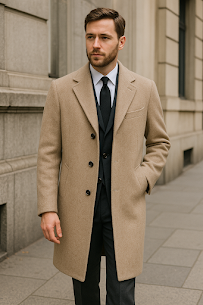
When investing in a bespoke overcoat, fabric choice matters just as much as the cut.
One of our most recommended fabrics for winter tailoring is a responsibly sourced Angora wool blend. Known for its soft, silky feel, warmth and lightness, it works particularly well for clients who want an elegant overcoat for business, formal occasions or international winter travel.
The main advantage is balance. Angora wool provides strong insulation without making the coat feel unnecessarily heavy or bulky, which becomes especially important when it is layered over a suit or jacket.
At Jesse & Son, we believe a bespoke overcoat should combine warmth, comfort and a clean tailored silhouette. The right fabric helps achieve all three.
Table of Contents
What Is Angora Wool?
Angora is a soft natural fibre known for its lightweight feel and insulating properties.
Our overcoat fabric combines Angora fibre with wool, creating a material with a smooth, silky texture and strong warmth while still maintaining an airy feel.
That combination makes it well suited to outerwear.
An overcoat needs enough substance to provide warmth and structure, but excessive weight can make the garment uncomfortable, particularly when it is worn over a suit.
The Angora wool blend helps balance those requirements while maintaining the refined appearance expected from tailored outerwear.
Why Is Angora Wool Good for an Overcoat?
A good overcoat should keep you warm without making the rest of your outfit feel heavy.
The Angora wool blend offers three main advantages:
| Benefit | Why It Matters |
|---|---|
| Warmth | Its dense, fluffy structure helps retain heat in colder conditions. |
| Softness | The fabric has a smooth, refined hand feel rather than feeling coarse. |
| Lightness | Strong insulation does not necessarily require an excessively heavy coat. |
This balance is especially useful for business travellers who may wear an overcoat over a suit during the day and continue wearing it to dinner or formal events.
The result is outerwear that feels practical without losing the polished appearance expected from bespoke tailoring.
Responsible Sourcing Matters
Fabric selection is not only about appearance.
Our Angora-based overcoat fabrics are responsibly sourced, which is worth considering for a garment intended to remain in your wardrobe for years rather than being treated as disposable seasonal clothing.
We prefer to be clear about what we can support rather than make broad sustainability claims simply because a fibre is natural.
The focus is on selecting quality fabrics from established suppliers and considering factors such as comfort, appearance, durability and intended use.
For a bespoke garment, the most important question is whether the fabric genuinely suits how and where you plan to wear it.
Warmth Without Excess Bulk
Layering changes how an overcoat needs to feel.
A winter outfit may include a dress shirt, tailored jacket and possibly a waistcoat before the overcoat is even added.
Each layer adds weight and volume.
A very heavy outer cloth can make the entire outfit cumbersome, especially when travelling, walking between meetings or moving frequently between heated indoor spaces and cold outdoor conditions.
An Angora wool blend provides useful insulation while maintaining a lighter feel.
The aim is not to create the thinnest coat possible. It is to provide enough warmth for winter use while allowing the garment to sit cleanly over tailoring.
An Overcoat Should Work With Your Suit
An overcoat should not fit exactly like a normal jacket.
It needs enough room to accommodate the clothes underneath without looking oversized.
If it is cut too closely, the suit jacket beneath can become compressed and movement can feel restricted. If it is too loose, the coat can lose the clean silhouette associated with tailored outerwear.
This is one reason to work with a custom tailor Bangkok clients can visit for fittings rather than choosing an overcoat purely from a standard chest size.
How you plan to wear the coat matters too.
Someone who usually wears it over business suits may need different proportions from someone planning to wear it mainly over shirts or knitwear.
Choosing the Right Overcoat Length
Length influences both appearance and practicality.
We offer men's overcoats in three general lengths.
Short Overcoats
Shorter coats are easy to move in and work well for clients frequently travelling between cars, airports, offices and hotels.
They tend to create a slightly more contemporary and casual look.
Knee-Length Overcoats
Knee length offers a useful balance between coverage and mobility.
It works particularly well over business tailoring and is versatile enough for everyday winter wear.
Full-Length Overcoats
A full-length coat creates the most traditional and formal silhouette.
It provides greater coverage and works particularly well when worn over formal tailoring.
There is no universal best length. The right choice depends on your height, proportions, wardrobe and how you intend to use the coat.
Choose Fabric for Where You Will Wear the Coat
Bangkok is not a city where most people need a heavy winter coat throughout the year.
Many of our clients, however, travel internationally or maintain wardrobes for different climates.
An overcoat commissioned here may ultimately be worn most often in London, Tokyo, Seoul, New York or another colder destination.
The fabric should therefore be selected according to where the coat will actually be worn, not simply where it is made.
Our Angora wool blend has an insulating structure suited to colder conditions and layering over suits or business wear.
This is why fabric recommendations should begin with the intended use of the garment rather than assuming one material suits everyone.
Fabric Affects the Shape of the Coat
The final silhouette comes from more than tailoring alone.
Fabric affects how an overcoat falls from the shoulders, how cleanly it hangs through the body and how much structure it maintains.
A good overcoat fabric needs enough substance to create shape without becoming stiff.
That matters because an overcoat has a much larger visual presence than most other tailored garments.
You usually notice the overall line of the coat before noticing individual details.
The fabric and construction therefore need to work together.
A Bespoke Overcoat Should Fit Into Your Wardrobe
A custom overcoat should work with the clothing you already own.
Classic colours such as navy, charcoal and camel remain popular because they combine easily with business suits and smart casual clothing.
But the design can also become more individual through colour, length and styling.
The advantage of working with a bespoke tailor Bangkok clients can meet personally is being able to consider these choices as part of a wider wardrobe rather than treating the coat as an isolated purchase.
Someone who regularly wears navy and charcoal suits may prefer an overcoat that coordinates easily with both. Someone with an understated wardrobe may use the coat to introduce a warmer or more distinctive colour.
The best option is ultimately the one you will wear regularly.
7 Things to Consider Before Choosing an Overcoat Fabric
Softness may be the first thing you notice when handling a fabric, but it should not be the only deciding factor.
Before choosing your overcoat cloth, consider these seven points:
-
Warmth
Think about the temperatures and conditions in which you expect to wear the coat. -
Weight
A heavier fabric can feel substantial, while a lighter insulating fabric may be easier for travel and layering. -
Softness
The hand feel influences how luxurious and comfortable the coat feels when worn. -
Structure and drape
The fabric should support the silhouette rather than feel too stiff or too loose. -
Colour versatility
Consider how easily the coat will coordinate with the suits, jackets and trousers you already own. -
What you will wear underneath
An overcoat worn over business suits needs to allow more room than one usually worn over knitwear. -
Where you will wear it
Your destination and climate should guide the fabric choice more than the location where the coat is being made.
These considerations make the selection process more practical and help avoid choosing a fabric simply because it feels luxurious in the showroom.
In-House Tailoring Gives Us Greater Control
Fabric alone does not determine whether an overcoat works.
Construction, fitting and finishing also play an important role.
Our tailoring is handled through our own workshop by a team of around 25 full-time tailors, with garments checked through our quality-control process before delivery.
For anyone comparing a Bangkok tailor, it is worth asking where the garment is made and how the finished piece is checked.
Overcoats are particularly dependent on good balance because they need enough room for layering while still maintaining a structured silhouette.
You can learn more about our workshop and approach on the About Jesse & Son page.
Think of Your Overcoat as Part of a Complete Wardrobe
A bespoke overcoat is rarely worn on its own.
It usually needs to work with suits, blazers, tailored trousers, knitwear and formal shoes.
A versatile coat makes those combinations much easier.
You can explore our wider men’s custom tailoring collection, including suits, jackets, trousers, shirts, waistcoats, tuxedos and overcoats.
Thinking about these garments together can also make fabric and colour decisions easier.
A bold overcoat can complement a restrained wardrobe, while a simpler coat may work better for someone who already wears more expressive tailoring.
What Should You Look for in Overcoat Fabric?
When comparing fabrics, the fibre name alone does not tell you everything.
Two materials within the same category can feel and perform very differently depending on their weight, structure and finish.
Our fabric collection provides more information about the Angora wool blend as well as the other wool, linen, cotton and specialist fabrics available through our tailoring service.
The best fabric is not automatically the most expensive one.
It is the one that makes the most sense for the garment and the way you plan to use it.
Quality Matters More Than the Fabric Name
Terms such as Angora, wool, cashmere or linen tell you what type of material you are considering, but they do not tell you everything about the finished garment.
That is why factors such as weight, softness, structure, climate and intended use matter just as much as the fibre itself.
Our tailoring pricing separates garments according to different fabric ranges rather than treating every material as though it were identical.
When commissioning an overcoat, the better question is not simply:
“Is this Angora?”
It is:
“Is this the right fabric for how I plan to wear the coat?”
That distinction can make a much bigger difference to how useful the finished garment becomes.
Why a Good Overcoat Can Stay in Your Wardrobe for Years
An overcoat is one of the more substantial pieces in a tailored wardrobe.
It should therefore be designed with more than one winter in mind.
A classic silhouette, versatile colour and quality fabric make the garment easier to wear year after year.
Custom tailoring also allows you to avoid choosing a shape simply because it happens to be fashionable at the moment.
Instead, the length, proportions and details can be selected according to what suits you and how you dress.
A well-chosen Angora wool blend supports that approach by combining warmth, softness and lightness with the refined appearance expected from tailored outerwear.
The goal is simple: a coat you continue reaching for whenever the temperature drops.
Conclusion
At Jesse & Son, we believe the best overcoat begins with choosing a fabric that suits the way you actually live and travel. Our responsibly sourced Angora wool blend combines softness, insulation and a lightweight feel, making it a strong option for business, formal wear and international winter travel. Combined with careful fitting and in-house tailoring, it allows us to create outerwear that feels practical without losing its elegance. If you are looking for a tailor bangkok clients can work with to create a custom winter overcoat, we would be happy to help you choose the right fabric and design.
Frequently Asked Questions
What is your Angora overcoat fabric made from?
Our overcoat fabric combines Angora fibre with wool, creating a soft and insulating material that still maintains a relatively light feel.
Is the Angora wool responsibly sourced?
Yes. Our Angora-based overcoat fabrics are responsibly sourced.
Is Angora wool suitable for cold winters?
The Angora wool blend is offered specifically for winter outerwear and provides strong insulation for colder conditions.
Can I wear an Angora wool overcoat over a suit?
Yes. A custom overcoat can be fitted with enough room for a suit or jacket underneath while still maintaining a clean silhouette.
What overcoat lengths are available?
We offer short, knee-length and full-length overcoats.
Can you make an overcoat for international winter travel?
Yes. Fabric, length and fit can be selected according to where and how you plan to wear the coat.
 +66814437747
 @jesseandson