
Why Bespoke Tailoring in Bangkok Beats Global Retail Brands
Global retail brands such as Zara, H&M and Uniqlo have obvious advantages.
You can walk into a store, try something on, pay a relatively accessible price and leave with it immediately. The styles are familiar, the sizing is standardized, and there is very little commitment involved.
But those same strengths also create limits.
Ready-to-wear clothing has to work for a broad range of customers. Bespoke tailoring works in the opposite direction: the garment is shaped around one person, one wardrobe and one intended use.
That difference is particularly noticeable in Bangkok, where experienced tailors can combine detailed fittings, broad fabric choice, customization and relatively fast turnaround.
For someone who values fit, individuality and long-term wardrobe planning, a Bangkok tailor can therefore offer something global retail simply is not designed to provide.
Table of Contents
- Fit Beyond Standard Sizing
- Personalization Goes Beyond Colour
- Bespoke Value in Bangkok Is About More Than Price
- Fabric and Construction Choices Are More Transparent
- Bangkok Tailoring Can Be Better Adapted to Your Climate
- Global Retail vs Bespoke Tailoring
- The Convenience Trade-Off Is Real
- Not Every Bangkok Tailor Offers the Same Experience
- 7 Things to Check Before Commissioning Bespoke Tailoring in Bangkok
- When Does Bespoke Make More Sense Than Retail?
- The Value of Building a Wardrobe Rather Than Buying Individual Pieces
Fit Beyond Standard Sizing
The biggest difference between ready-to-wear and bespoke clothing is not the label or fabric.
It is the way the garment is fitted.
Ready-to-Wear Has to Fit a Size Range
Global retailers work with standardized sizes.
That system is efficient because one jacket can be produced in large quantities and sold across multiple markets.
The compromise is that a standard size cannot account precisely for every difference in:
- shoulder slope
- posture
- chest shape
- waist position
- arm length
- trouser rise
- leg shape
- overall proportion
This does not mean ready-to-wear clothing cannot fit well. Many people find standard sizes that work perfectly well, sometimes with minor alterations.
But the garment begins with a predefined size.
Bespoke Starts With the Individual
A bespoke process begins differently.
At Jesse & Son, the tailoring process includes detailed measurements as well as notes on build, stance and posture. A pattern is then created for the garment based on those measurements and the style discussed with the client.
The pattern is not the end of the process.
Fittings allow the tailor to see how the garment actually sits on the body and make adjustments to areas such as sleeve length, jacket balance, shoulder pitch, waist suppression, trouser waist and trouser break.
This is what makes bespoke fit fundamentally different from simply choosing a smaller or larger retail size.
Personalization Goes Beyond Colour
Retail brands offer choice, but the choice is usually defined before you enter the store.
A jacket may come in several colours, perhaps two fits and a limited number of fabrics for that season.
With a custom tailor Bangkok clients can make decisions much earlier in the design process.
Depending on the garment, those choices can include:
- fabric
- lining
- lapel style and width
- pocket style
- vent configuration
- buttons
- buttonhole colour
- trouser rise
- trouser break
- monogramming
- sleeve details
The point is not to add every possible customization.
Often, the best bespoke garments are relatively restrained.
The advantage is being able to decide which details actually matter to you.
Bespoke Value in Bangkok Is About More Than Price
One of the original arguments for Bangkok tailoring was that it is simply cheaper than bespoke tailoring elsewhere.
That can be true, but it is not the most useful way to think about value.
A bespoke garment will often cost more upfront than a mass-market jacket or suit.
The more meaningful question is what you are receiving for the price.
Custom suits currently start from THB 11,500, with the final price depending on fabric, construction and customization.
That price includes something fundamentally different from taking a ready-made garment off a rack: consultation, measurement, fitting, customization and construction around the individual client.
For someone who values those elements, the price comparison becomes less about “cheap versus expensive” and more about what kind of clothing experience you are buying.
Fabric and Construction Choices Are More Transparent
Ready-to-wear shoppers usually choose from finished garments.
With bespoke tailoring, the fabric and construction decisions happen before the garment exists.
That gives the client more opportunity to understand what they are buying.
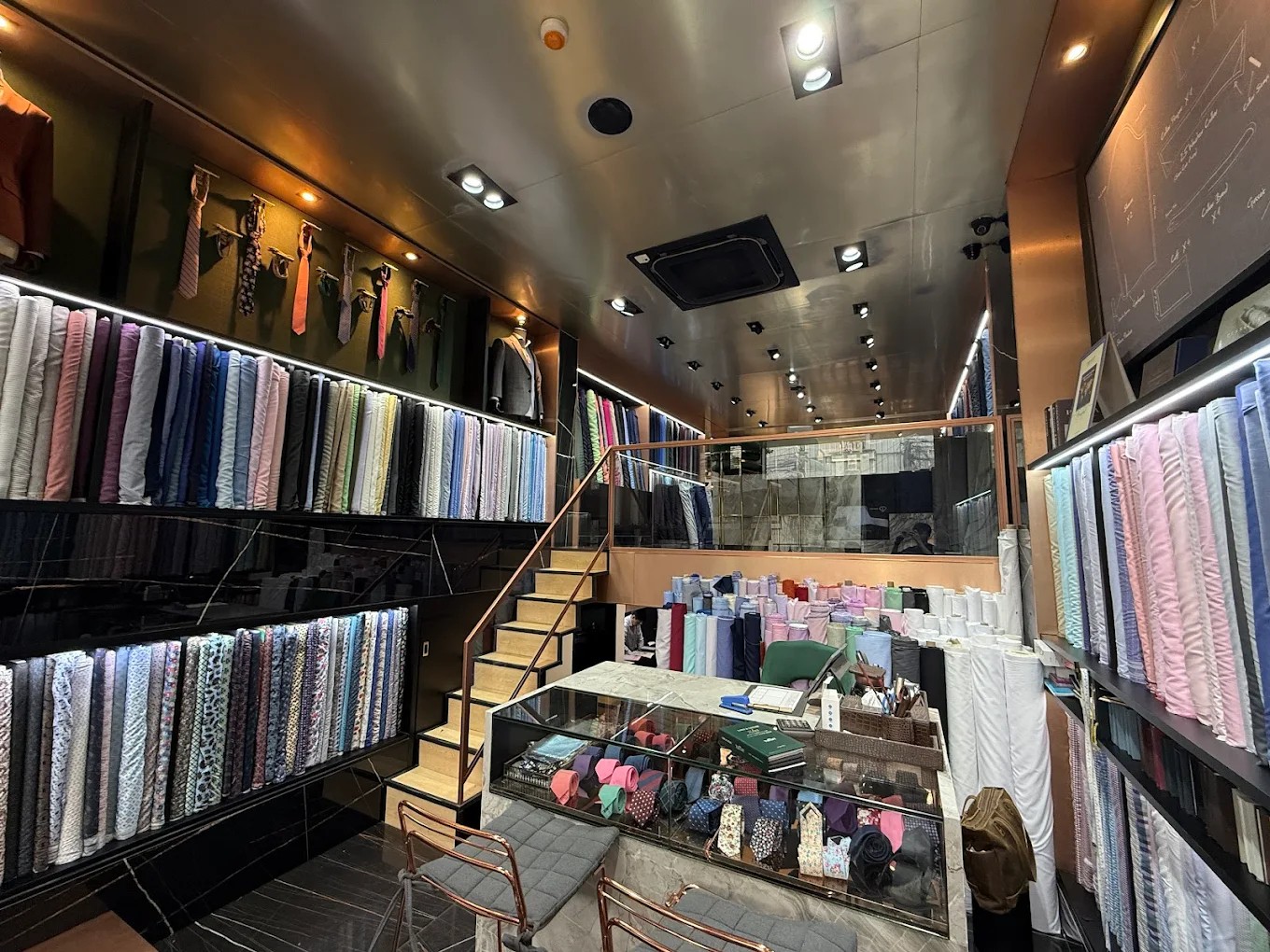
Our fabric collection includes wool blends, pure wool, linen and other cloths sourced from mills around the world. Fabrics are selected for factors such as comfort, structure, durability and long-term performance.
Suit construction can also be discussed directly.
For our suits, half-canvas construction is standard, with full-canvas available.
This is an important difference from buying purely on appearance.
A suit can look good on a hanger while telling you very little about what sits beneath the outer fabric.
Bespoke gives you the opportunity to ask.
Bangkok Tailoring Can Be Better Adapted to Your Climate
Fabric should be selected according to where the garment will actually be worn.
That matters particularly in Thailand.
Bangkok's heat and humidity can make heavy or poorly ventilated tailoring uncomfortable for daily use.
A local bespoke tailor Bangkok clients can discuss climate with can recommend fabric according to the intended environment.
For warmer conditions, lighter wool, linen and breathable materials can be considered.
The same principle works in reverse.
A client living in Bangkok may actually be commissioning a suit for London business trips or an overcoat for winter travel.
The right fabric depends on destination and use, not simply where the tailor is located.
Global Retail vs Bespoke Tailoring
| Feature | Global Retail | Bespoke Tailoring in Bangkok |
|---|---|---|
| Availability | Immediate | Requires consultation and fittings |
| Starting Point | Standard size | Individual measurements and fitting |
| Design Choice | Pre-selected seasonal options | Broad customization |
| Fabric Choice | Limited to finished collection | Selected before construction |
| Fit Adjustments | Usually alterations after purchase | Refined during the fitting process |
| Convenience | Very high | Requires more time |
| Personalization | Limited | High |
| Best For | Immediate, accessible clothing | Clients prioritizing fit and individuality |
The two options are designed to solve different problems.
If you need a blazer this afternoon, retail is the obvious choice.
If you want a garment built around your body, wardrobe and preferences, bespoke has the advantage.
The Convenience Trade-Off Is Real
Bespoke tailoring is not more convenient than retail.
It should not pretend to be.
A ready-to-wear store allows you to try on several garments immediately and walk out with the one you like.
A bespoke garment requires time.
Measurements provide the starting point, but fittings are where the garment is refined.
For travelers, the schedule matters.
Express tailoring can be possible, but a short turnaround leaves less room for fitting adjustments. A 48–72 hour express service can be arranged for suitable orders when planned in advance.
So the real comparison is straightforward:
Retail saves time. Bespoke spends time on fit.
Which one matters more depends on why you are buying the garment.
Not Every Bangkok Tailor Offers the Same Experience
Bangkok has a very large tailoring market.
Quality, pricing, fittings and production methods can vary significantly between shops.
Before ordering, ask practical questions.
How many fittings are expected? What exactly is included in the quoted price? Which fabric are you buying? Where will the garment be made? What happens if the final fit still needs adjustment?
Those answers reveal far more than a sales pitch.
If a price sounds unusually low, ask what fabric and construction are included rather than assuming it represents the same product as a more expensive quote.
Clear communication before production is one of the easiest ways to avoid disappointment.
7 Things to Check Before Commissioning Bespoke Tailoring in Bangkok
If you are comparing Bangkok tailors, use these seven points rather than focusing only on price.
1. Check the Fabric
Ask about fibre content, weight, mill and suitability for the climate where you will wear it.
Our fabric collection gives an overview of the different material categories available for tailored garments.
2. Understand the Construction
Ask whether the jacket is fused, half-canvassed or fully canvassed and what construction is included at your quoted price.
3. Ask About Fittings
Find out how many fittings are normally expected and whether additional fit refinement is included.
Our guide to how bespoke tailoring works in Bangkok explains the process from consultation through fittings and final completion.
4. Tell the Tailor Your Deadline
If you are visiting Bangkok, give your departure date before placing the order.
A realistic schedule is more important than simply asking for the fastest possible completion.
5. Bring Style References
Photos or garments you already like can make discussions about lapels, trouser width, jacket length and overall silhouette much clearer.
6. Clarify Adjustments Before Paying
Ask what happens if the garment still needs refinement at final collection.
Our guide to Bangkok tailoring alterations and revisions explains what clients should clarify before production begins.
7. Compare the Whole Product, Not Just the Quote
Fabric, construction, fittings, finishing and service all contribute to the final value.
You can review our current tailoring prices and fabric tiers for a clearer example of how those choices affect cost.
When Does Bespoke Make More Sense Than Retail?
Bespoke is not necessary for every garment.
Retail may make more sense if:
- you need something immediately
- standard sizing already fits you well
- you want a lower-cost seasonal piece
- you enjoy changing styles frequently
Bespoke becomes more compelling if:
- standard sizing regularly fits poorly
- you want specific proportions or design details
- you care about fabric and internal construction
- you want a garment built around a particular occasion
- you plan to wear the piece regularly
- you prefer building a coordinated long-term wardrobe
This is where the difference between mass retail and tailoring becomes clearest.
One provides immediate choice from garments already designed.
The other lets you participate in designing the garment itself.
The Value of Building a Wardrobe Rather Than Buying Individual Pieces
One of the less obvious advantages of bespoke tailoring is continuity.
Once you understand the colours, cuts and proportions that work for you, future garments can be planned around what you already own.
A navy suit can be followed by a complementary blazer. Trousers can be designed to work with several jackets. Shirts can be selected around the colours already present in your wardrobe.
This approach is very different from buying whatever happens to appear in a seasonal collection.
Clients interested in building a broader tailored wardrobe can explore our men's custom tailoring collection, covering suits, jackets, trousers, shirts, tuxedos, waistcoats and overcoats.
The objective is not necessarily to own more clothing.
It is to make the clothing you own work together more effectively.
Conclusion
At Jesse & Son, we see bespoke tailoring as an alternative for clients who want more control over fit, fabric and design than ready-to-wear clothing can reasonably provide. Global retail remains unbeatable for immediate convenience, but custom tailoring offers something different: a garment developed around the individual wearer and refined through a fitting process. If you are looking for a tailor bangkok clients can work with to create clothing around their proportions, preferences and wardrobe, we would be happy to guide you through the process.
Frequently Asked Questions
Is bespoke tailoring in Bangkok cheaper than buying designer clothing?
It depends on the fabric, construction and brand being compared. Bangkok tailoring can offer strong value, but custom clothing should be compared on fit, material and construction rather than price alone.
How much does a custom suit cost in Bangkok?
Custom suits currently start from THB 11,500. Final pricing depends on fabric, construction and customization.
How long does bespoke tailoring take in Bangkok?
The timeline depends on the garment and fitting schedule. A more relaxed process may take several days or longer, while express 48–72 hour tailoring is possible for some orders when arranged in advance.
Is bespoke always better than ready-to-wear?
No. Ready-to-wear is more convenient and may be perfectly suitable if standard sizing fits you well. Bespoke is most valuable when fit, customization and individual fabric choices are important.
What is the main difference between bespoke and off-the-rack clothing?
Off-the-rack clothing begins with standardized sizes and pre-selected designs. Bespoke tailoring begins with individual measurements, design choices and a fitting process used to refine the garment.
Can bespoke suits be altered later?
Many tailored garments can be adjusted, but the amount depends on their construction and available seam allowance. Ask the tailor about future alteration options when commissioning the garment.
 +66814437747
 @jesseandson