
Custom Suits in Bangkok: How We Build the Perfect Fit From Scratch
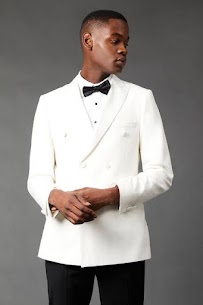
At Jesse & Son, every custom suit begins with the right fabric. With thousands of choices, we help you select materials that not only look sharp but also suit Bangkok’s climate. From there, either myself or my brother Nick personally takes your measurements, over 20 in total, to ensure a foundation of comfort and precision.
Unlike many tailors who outsource, all work is done in our own workshop by 25 full-time craftsmen and checked by three dedicated QC staff. Half-canvas construction is our standard, with full-canvas available for those who want the very best.
Fittings are never rushed. From the baste fitting to the final try-on, we fine-tune every detail until your suit feels like a second skin. Some nights we stay late, simply because we won’t stop until you are completely satisfied.
The finishing touches set us apart: Milanese buttonholes, hand-stitched lapels, and real horn or corozo buttons that bring character to your garment. Before delivery, every suit passes a final inspection by both our QC team and myself to guarantee perfection.
That’s why more than 1,600 clients have rated us five stars: at Jesse & Son, we don’t just make suits, we build confidence, one stitch at a time.
But what actually happens between choosing a fabric and putting on the finished suit?
For us, achieving the right fit is not about taking a few measurements and sending them to a factory. It is a process of understanding the person who will wear the suit, building the garment around them, seeing how it behaves during fittings, and making adjustments until all the different elements work together.
It Starts With Understanding What the Suit Needs to Do
Before we think about lapel shapes, buttons or linings, we need to understand why you are having the suit made.
A suit for everyday business wear has different requirements from a tuxedo, wedding suit or jacket that will only be worn occasionally. Someone working in Bangkok throughout the year may prioritise breathability and versatility, while a client travelling back to a cooler climate might want a heavier cloth with a different drape and structure.
Lifestyle matters too.
How frequently will you wear the suit? Will you spend most of the day sitting in meetings? Do you travel regularly? Are you looking for something conservative enough for corporate environments, or do you have more freedom to express your personal style?
These conversations help shape the garment before the first measurement is even taken.
That is an important part of working with a custom tailor Bangkok clients can visit in person. The goal is not simply to reproduce a standard suit in your size, but to create something around how you actually intend to wear it.
Choosing the Right Fabric for Your Suit
Fabric selection is one of the most enjoyable parts of commissioning a custom suit, but it is also one of the most important.
Colour and pattern are only the beginning.
The weight, fibre, weave and overall character of a cloth influence how a jacket drapes, how comfortable it feels and how appropriate it will be for different occasions and climates.
At Jesse & Son, our selection includes wools, cottons, linens and other fabrics sourced through certified agents. We help clients narrow those choices according to how and where the finished garment will be worn.
For Bangkok, this can mean placing greater emphasis on lighter, breathable materials rather than automatically choosing the heaviest or most luxurious-looking cloth.
A fabric should make sense for the garment.
Someone ordering their first navy business suit may need something completely different from a groom looking for a statement wedding suit or a traveller commissioning a jacket for European winters.
Clients who want to explore these choices in more detail can browse our suit fabrics and linings, including the Bemberg lining we use as our standard suit lining.
More Than 20 Measurements Create the Starting Point
Once the fabric and general direction are established, we move on to measurements.
Either myself or my brother Nick personally takes more than 20 measurements to build the foundation for the garment.
The numbers are important, but good tailoring is not simply a mathematical exercise.
Two people can have very similar chest, waist and shoulder measurements while standing completely differently. Posture, shoulder position, arm position and the natural balance of the body can all influence how a jacket sits.
That is why we look at the person rather than relying only on the tape measure.
These measurements give our tailoring team the foundation to begin shaping the garment around the individual client. Rather than relying on a standard ready-to-wear size, the fit is then refined through the fitting process to account for the client’s proportions, posture and personal preferences.
The objective is balance.
The shoulders should sit naturally. The jacket should close cleanly. The trousers should fall properly. Sleeves should hang correctly. And most importantly, the wearer should still be able to move comfortably.
A suit can look extremely sharp while standing still but feel restrictive once you sit down or move your arms. For us, that is not a successful fit.
Your Suit Is Built in Our Own Workshop
Measurements and fitting only work when the information collected during your appointment carries through into construction.
At Jesse & Son, our tailoring work is completed in our own workshop by 25 full-time craftsmen rather than being passed to an unknown external production line.
This gives us greater control over how a garment progresses through the tailoring process and allows the team responsible for the fittings and quality control to remain closely connected to the people making the suit.
As a family-run Bangkok tailor, this matters to us.
Jesse has worked in tailoring for more than 30 years, beginning with roots in Udonthani before eventually establishing Jesse & Son on Sukhumvit Road in Bangkok. Throughout that time, the emphasis has remained on combining traditional tailoring knowledge with modern cuts, fabrics and individual client preferences.
Our story and approach to bespoke tailoring explains more about how that philosophy developed.
Half-Canvas Construction Comes as Standard
The inside of a jacket matters just as much as the outside.
At Jesse & Son, half-canvas construction is our standard, while full-canvas construction is available for clients who want to take the internal construction further.
The canvas helps create the structure beneath the exterior fabric of the jacket. Rather than relying entirely on the outer cloth to maintain its form, the internal construction helps support the chest and lapel.
This becomes particularly noticeable around the front of the jacket, where good construction contributes to a cleaner shape and a more natural lapel roll.
Full-canvas construction extends this internal structure further through the jacket and can be selected according to the client’s preference, fabric and expectations for the garment.
The important point is that construction should be discussed rather than hidden.
When comparing one bespoke tailor Bangkok option with another, it is worth asking exactly how the jacket will be made rather than judging quality purely by the appearance of the finished sample.
Why the Baste Fitting Matters
The first version of a suit is not supposed to be perfect.
That is precisely why fittings exist.
During the baste fitting, the garment is still at a stage where changes can be made before everything is permanently finished. This allows us to see how the jacket and trousers behave on the client's actual body.
Measurements taken at the beginning tell us where to start. The baste fitting shows us what needs to happen next.
We look at details such as:
-
the balance of the jacket
-
shoulder position
-
chest and waist suppression
-
jacket length
-
sleeve length and position
-
trouser waist and seat
-
trouser break and overall silhouette
-
how comfortably the client can move
Some changes can be extremely small, but several small adjustments together can make a significant difference to how natural the finished suit looks.
That is why we do not believe fittings should be rushed.
If you are commissioning your first suit and want a broader overview of what happens at each stage, our guide to how bespoke tailoring works in Bangkok goes through the complete appointment and fitting process in more detail.
The Second Fitting Is About Refinement
Once the initial fitting adjustments have been made, the suit begins moving closer to its final shape.
At this point, the focus shifts from establishing the basic fit to refining it.
A jacket may already look good during the first fitting, but we still pay attention to how the fabric falls, whether the proportions feel balanced and whether there are small areas that could sit more cleanly.
Fit should also reflect the client's preference.
Some clients want a very close, contemporary silhouette. Others prefer more room through the chest and body. Someone accustomed to European tailoring may have different expectations from a client who prefers a more traditional business fit.
We do not believe there is one universal definition of the perfect silhouette.
The better question is whether the suit fits you properly and achieves the look you wanted when the process began.
The Details Give the Suit Its Personality
Once the foundation of the suit is correct, the smaller choices become much more noticeable.
This is where bespoke tailoring becomes personal.
Our suits can incorporate details such as hand-stitched lapels, real horn or corozo buttons, customised collar felt, individual buttonhole colours and other finishing options.
These choices can be subtle or expressive.
A corporate suit might use conservative horn buttons, a classic notch lapel and understated stitching. A wedding or evening jacket might allow more freedom with lapel style, fabric texture or contrasting details.
There is no requirement to customise everything simply because the option exists.
In fact, some of the best bespoke suits are relatively restrained.
The purpose of these decisions is to make the garment feel personal without allowing individual details to overwhelm the overall design.
For clients who want to understand how different lapels and pockets affect a jacket, our guide to custom pocket and lapel details for Bangkok bespoke suits looks at those choices in greater depth.
Milanese Buttonholes: A Small Detail That Takes Time
One finishing detail we are particularly proud of is the Milanese buttonhole.
Unlike a standard machine-finished lapel buttonhole, ours can be fully hand-sewn using silk twist and a supporting gimp cord. The process can take 20–40 minutes for a single buttonhole.
That may seem like a lot of time to spend on such a small part of a jacket.
But that is exactly the point.
Bespoke tailoring is often defined by details that most people will never consciously notice. The wearer may see the buttonhole every time they put on the suit, while someone else may only register that the jacket looks particularly refined without knowing why.
We explored the craftsmanship behind this feature in more detail in why we use Milanese buttonholes on our bespoke suits.
Quality Control Happens Before the Suit Leaves Our Store
Finishing the construction does not automatically mean the garment is ready to leave.
Our suits are checked by three dedicated QC staff, and I carry out my own final inspection before delivery.
This final stage gives us another opportunity to look for anything that does not meet the standard established during the fitting process.
We check the garment as a whole rather than treating quality control as simply looking for loose threads.
The fit, pressing, finishing and smaller construction details all need to come together.
Our About page describes this as paying attention to even the smallest details, from real horn buttons on suitings to custom collar felt and buttonhole colours, while ensuring tailored items pass quality-control standards before leaving the store.
That final check is particularly important because once a client takes the garment home, they should be thinking about wearing it, not immediately noticing something we should have corrected.
A Custom Suit Should Be Made to Last Beyond the First Wearing
The real test of a suit does not happen in front of the shop mirror.
It happens after you have worn it to meetings, weddings, dinners, conferences and everyday events.
A garment can make a strong first impression but still disappoint if it becomes uncomfortable after several hours or if the design is too specific to work with the rest of your wardrobe.
That is why we consider practical use throughout the process.
A business suit should remain versatile. A wedding suit should photograph beautifully but still feel comfortable throughout a long day. A travel suit should be easy enough to combine with different shirts and accessories.
Our men’s custom tailoring range covers suits as well as blazers, shirts, trousers, waistcoats, overcoats and tuxedos, allowing different pieces to be planned as part of a wider wardrobe rather than in isolation.
What Should You Compare When Choosing a Bangkok Tailor?
Price matters, but it should not be the only comparison.
Two suits advertised at different prices may involve completely different fabrics, construction methods, fitting processes and finishing standards.
Before ordering, it is worth asking:
-
What fabric am I actually receiving?
-
Is the jacket fused, half-canvassed or fully canvassed?
-
Is an individual pattern being created?
-
How many fittings will I have?
-
Who is making the garment?
-
Is the work completed in-house or outsourced?
-
What type of buttons and lining are included?
-
What happens if adjustments are needed?
-
Who checks the finished suit before collection?
These questions tell you far more than simply comparing the lowest advertised price.
At Jesse & Son, our tailoring prices are structured around garment and fabric choices, with fixed and fair pricing for our customers. The objective is to put as much value as possible into the actual garment, including its materials, construction and service.
From a Length of Fabric to Something Made Only for You
When you first walk into the store, your suit does not exist yet.
There is fabric, a conversation and a set of measurements.
From there, the garment gradually takes shape through pattern cutting, construction, fittings, adjustments, finishing and inspection.
That progression is what makes custom tailoring different.
The final garment should not simply match your measurements. It should account for your posture, proportions, preferences, lifestyle and the occasions for which you intend to wear it.
Every stage contributes something.
The fabric determines much of its character. Measurements establish the foundation. Construction creates structure. Fittings refine the balance. Details make it personal. Quality control brings everything together.
Remove one of those stages and the result can change considerably.
Conclusion
At Jesse & Son, we believe a great custom suit is built through hundreds of decisions rather than one perfect measurement. From helping you select the right fabric and creating your individual pattern to carrying out fittings, construction, hand-finishing and final quality control, every stage has a purpose. After more than 30 years in tailoring, that attention to the complete process remains at the heart of how we work. If you are looking for a tailor bangkok clients can work with from the first fabric choice through to the final fitting, we would be happy to help create something made specifically for you.
Frequently Asked Questions
How many measurements are taken for a custom suit at Jesse & Son?
Either Jesse or Nick personally takes more than 20 measurements when preparing a custom suit. These measurements provide the starting point for creating the garment and are then refined through the fitting process.
Are Jesse & Son suits made in-house?
According to Jesse & Son, tailoring work is completed in its own workshop by 25 full-time craftsmen and checked by three dedicated quality-control staff.
Does Jesse & Son use half-canvas construction?
Yes. Half-canvas construction is the standard option for Jesse & Son suits, with full-canvas construction also available.
How many fittings does a custom suit need?
The exact number can depend on the garment, fit and adjustments required. Jesse & Son uses fittings such as the baste fitting and final try-on to refine the garment rather than relying on measurements alone.
What fabrics work well for a suit in Bangkok?
The right choice depends on how the suit will be used, but breathable and lighter-weight materials can be especially useful in Bangkok's warm climate. Fabric fibre, weave, weight and intended occasion should all be considered rather than choosing solely by colour or pattern.
Can I customise the details of my suit?
Yes. Jesse & Son offers customisation including lapel and pocket choices, buttons, buttonhole colours, collar felt and other finishing details. The aim is to choose details that complement the overall suit rather than adding customisation simply for its own sake.
 +66814437747
 @jesseandson